
Keep Disease Out
A no-power, no-plumbing plan you can set up in 60 minutes

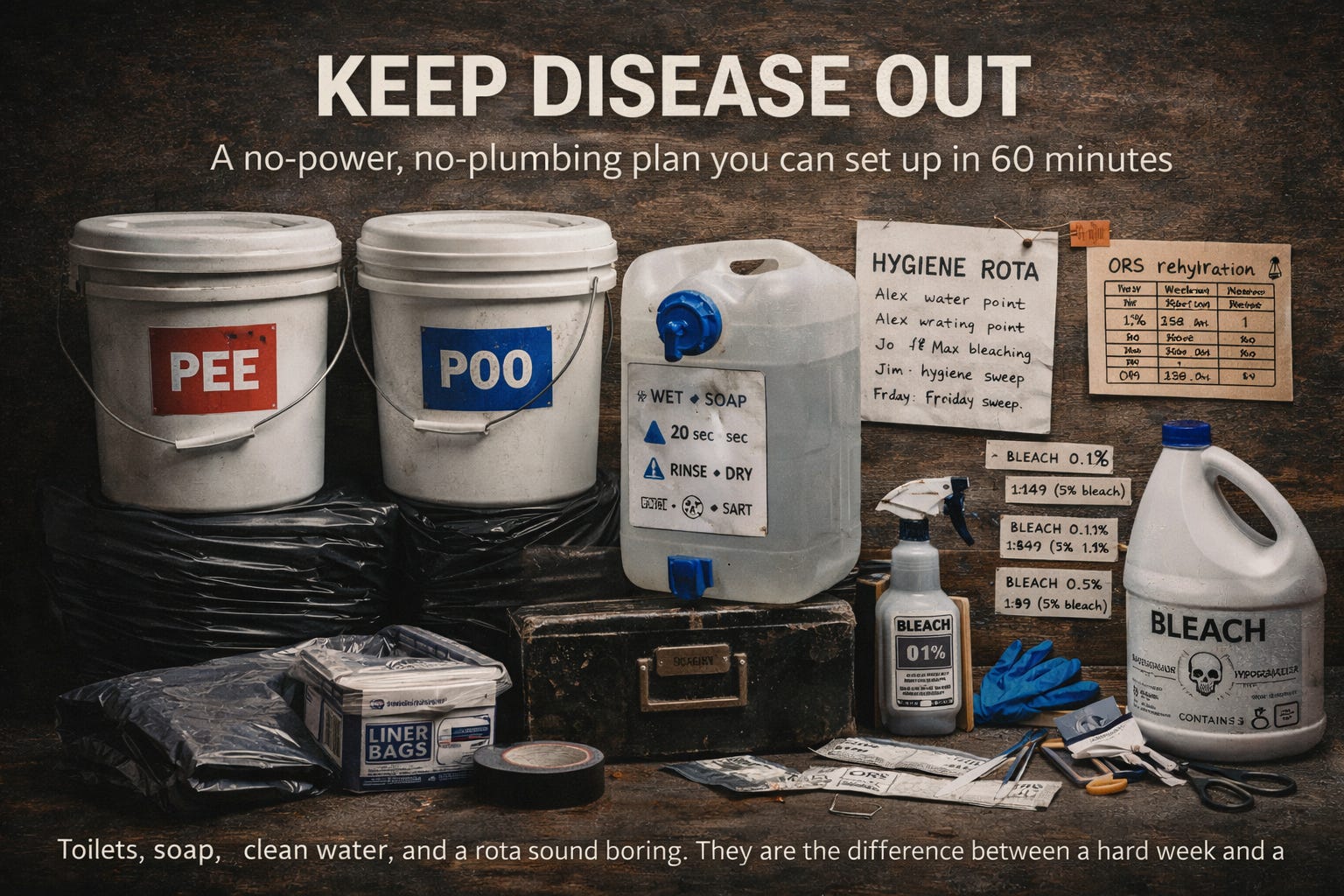
When systems wobble, more people get sick from bad water and dirty hands than from the initial event. This guide keeps your home and street on the safe side of that line.
The 60-minute home plan
Hand-wash station at the kitchen entrance: a water jug with spigot, soap, paper towels, a catch-bucket, and a “wash here first” sign.
Twin-bucket toilet to separate pee and poo. Solids get covered with dry material. Liquids get their own bucket. Lids on both.
Bleach mixes made now, labeled, dated. One for routine surfaces, one for blood and body fluids.
Trash and vector control: thick bags, lids, and a daily tie-off time so flies and rats never get an easy buffet.
Hygiene rota: who cleans what, when. Post it. Stick to it.
Build the twin-bucket toilet (10 minutes)
Why separate? Urine is mostly sterile. Keeping it out of solids reduces smell, volume, and pathogens. This “twin-bucket” setup is widely recommended for serious disruptions.
You need
Two sturdy buckets with tight lids
Seat or simple rim (optional but nice)
Dry cover material: sawdust, shredded paper, dry leaves, or coco coir
Spray bottle with 0.1% bleach for rim and lid
Gloves, hand gel, heavy trash bags
How
Label one bucket “pee” and one “poo.”
Add a thin layer of dry cover to the poo bucket.
After each use, cover solids completely. Lid on.
Keep both buckets in a ventilated spot.
Empty the pee bucket away from doors and drains, following local rules. Never near water sources.
Store sealed poo bags in a lidded container until official disposal is available. For ground disposal only where legal and safe: keep at least 30 m from groundwater sources and about 6 m from dwellings.
Disinfect right, not “stronger”
Bleach strength on the label matters. Aim for these tried standards:
0.1% bleach for routine surfaces.
Mix 1 part of 0.5% bleach with 4 parts clean water, or dilute 5% bleach at 1:49.0.5% bleach for blood and body fluids.
Mix 1 part of 5% bleach with 9 parts water.
Wear gloves. Ventilate. Make fresh daily. Never mix bleach with ammonia. Guidance aligns with World Health Organization technical sheets.
Safe water, fast
Boil for 1 minute at a rolling boil.
If you must chlorinate with household bleach: for 5–9% sodium hypochlorite use roughly 8 drops per gallon (double if cloudy), wait 30 minutes. Matches current advice from Centers for Disease Control and Prevention and the US Environmental Protection Agency.
Community planning benchmark: 15–20 L per person per day covers drinking, cooking, and hygiene. Sphere WASH indicators use 15 L as the floor and set access targets like ≤500 m to a water point.
Stop dehydration early
Know the home recipe for oral rehydration when vomiting or diarrhea hits:
1 liter clean water + 6 level teaspoons sugar + 1/2 level teaspoon salt. Stir until dissolved. Use within 24 hours. Proven, simple, and endorsed in emergency training by the Red Cross and public-health programs. If symptoms are severe or persistent, seek medical help.
Entity refs: International Federation of Red Cross and Red Crescent Societies
Hand-wash station recipe
Water jug with tap, bowl to catch runoff
Regular soap beats sanitizer for routine use
Paper towels or clean cloths in a lidded box
A small poster: Wet → Soap 20 sec → Rinse → Dry
If water is tight, prioritize washing after toilet use, before food prep, before eating, and after cleaning.
Apartment checklist
Two buckets with lids, liner bags, dry cover material
Jug with spigot, 10 bars of soap, 3 bottles hand gel
Unscented bleach with sodium hypochlorite clearly labeled
Spray bottles x2, gloves, masks for cleaning
Heavy trash bags, duct tape, marker, paper signs
ORS sachets if you can store them, or the sugar-salt recipe printed and posted
A printed one-page rota
Street-level hygiene board
Print and post a simple sheet in your building or block:
Quiet hours for rest
Shared clean-up times
Water point schedule
“How to mix ORS” box
“Bleach 0.1% / 0.5%” box
Who to call, when
Aim for calm and predictable. People follow clarity.
Sources worth bookmarking
Sphere WASH minimums for water and sanitation.
Centers for Disease Control and Prevention emergency water safety.
World Health Organization bleach dilution guidance.
Twin-bucket toilet how-tos from emergency programs.
Bottom line
Toilets, soap, clean water, and a rota sound boring. They are the difference between a hard week and a health disaster. Set this up now. Teach a neighbor. Keep disease out.